
How to Make an OC
An OC, or original character, is a character you invent yourself: for a story, a role-play, a fandom or just for fun. Making one comes down to a few decisions: who they are, what they want, how they look and what they're called. This guide walks through each step, and shows how to get your OC drawn even if you can't draw.
How to make an OC in 7 steps
Step 1: Start with a one-line concept
Write one sentence with three parts: who they are, what they want and what gets in their way. “A shy fox courier who wants to see the whole map but is afraid of the dark.” A concept like this gives you a personality, a story and design ideas at the same time. Don't start with the outfit; start with the person.
Step 2: Give them a personality and a backstory
Pick two or three strong traits and one flaw that causes trouble. A flaw makes a character feel real: the brave knight who can't admit she's wrong, the cheerful baker who hides how tired he is. Then write a short backstory, a paragraph is enough, that explains where those traits came from. Leave room to grow: you can add lore later.
Step 3: Design the look
Let the concept decide the design.
- Silhouette: the character should be recognizable as a black shape. Give them one big shape: a hat, a tail, oversized boots, a long coat.
- Colors: two or three main colors plus one accent. Fewer colors read better at small sizes, like stickers and icons.
- One signature detail: a scar, a pin, an odd sock, a glowing ribbon. Something people remember and artists can't get wrong.
- Clothes that tell the story: a courier wears practical boots and a bag; a royal wears something impractical and expensive.
Step 4: Choose a name
Say it out loud and check it fits the world: a sci-fi pilot and a forest witch need different names. Look up the meaning if you like names with a story, and search the name with the fandom you're in, so you don't copy a canon character by accident.
Step 5: Draw it, or describe it
You don't have to draw to make an OC. Three ways to get your character on the page:
- Draw it yourself: start with simple shapes, use a reference pose and don't worry about style.
- Use a dress-up maker like Picrew: quick, but every result is in that maker's art style and limited to its parts.
- Describe it to an AI OC maker: write the concept, personality cues and look in plain words, pick an art style and get the character drawn in seconds.
On DrawMyOC, what you type is exactly the prompt that runs, and the same character can then become stickers, a PNGtuber set and more. These three characters were drawn from the descriptions under each picture:
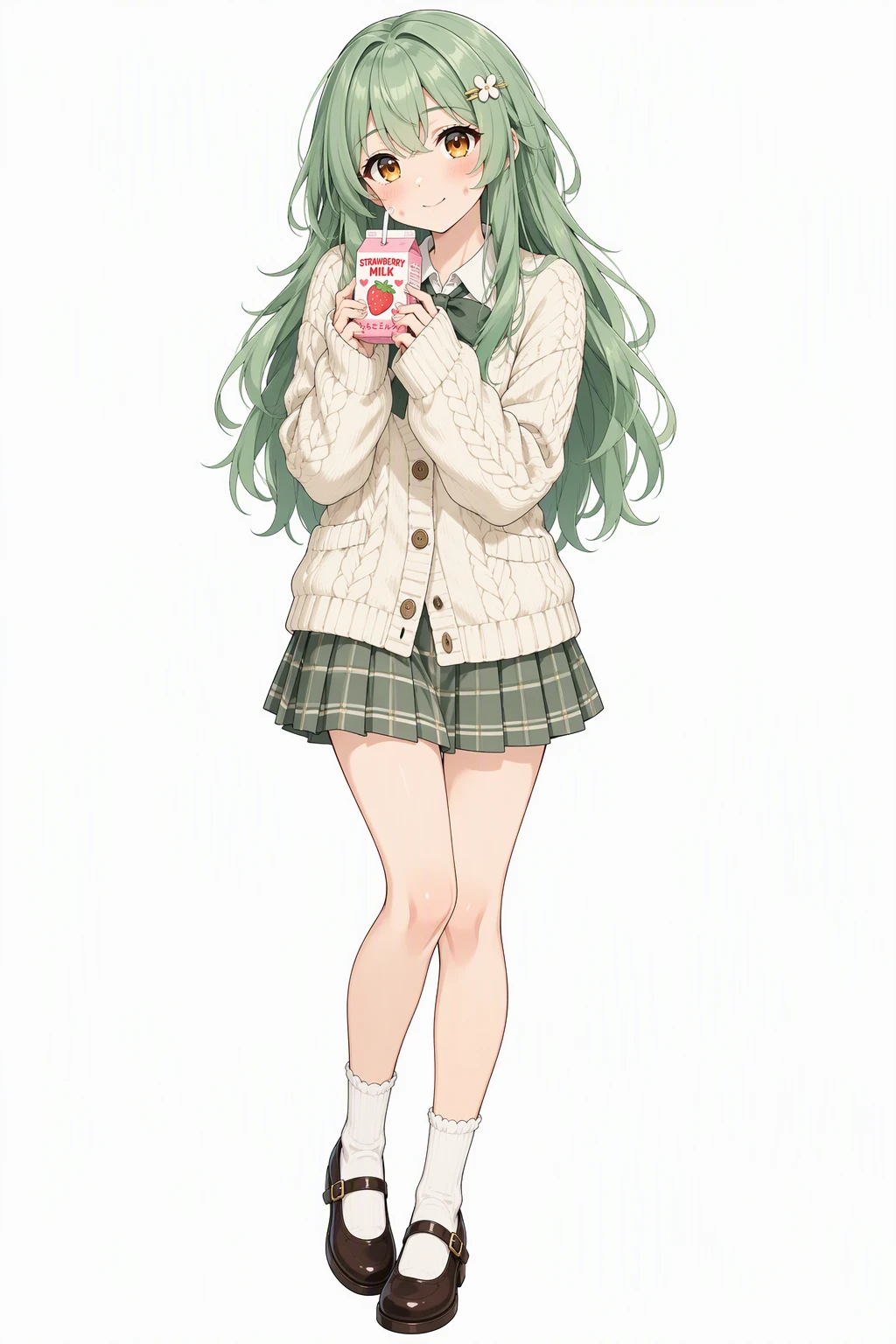
Mint Prompt
Vibrant anime illustration with clean line art, cel shading and expressive large eyes. A cheerful young woman with long layered mint-green hair, warm amber eyes and dimpled fair cheeks, wearing a cream knitted cardigan over a pleated skirt with Mary Janes and a small hair clip, holding a strawberry milk carton with a shy soft smile. Single character, full body, clean white background.
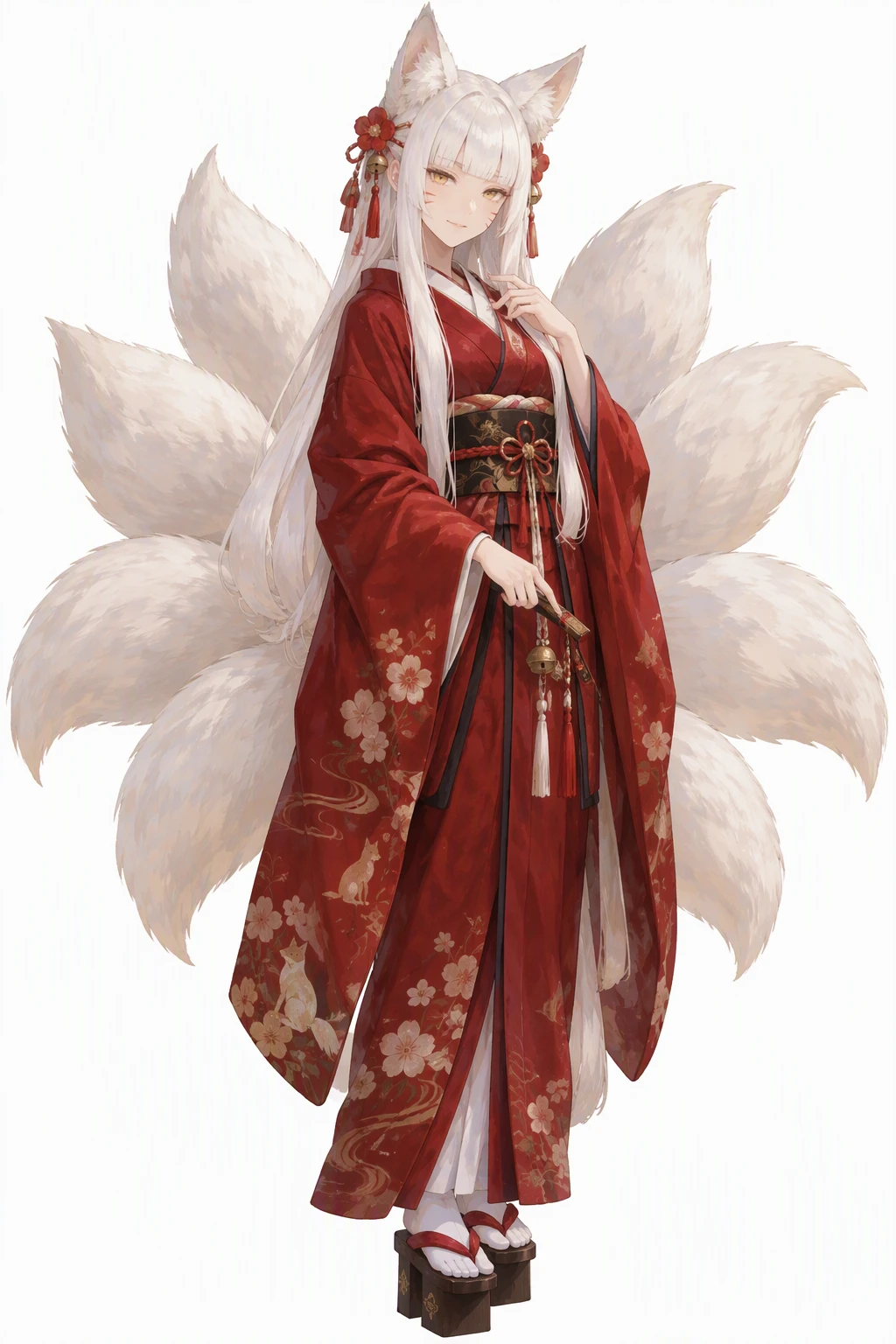
Shrine Fox Keeper Prompt
Hand-painted anime style with soft painterly brushwork and gentle color blending. A fox spirit shrine keeper with long white hime-cut hair, golden eyes and faint whisker marks on her cheeks, fox ears and tails fanned out behind a deep red kimono, geta on her feet, wearing a quiet mysterious smile. Single character, full body, clean white background.
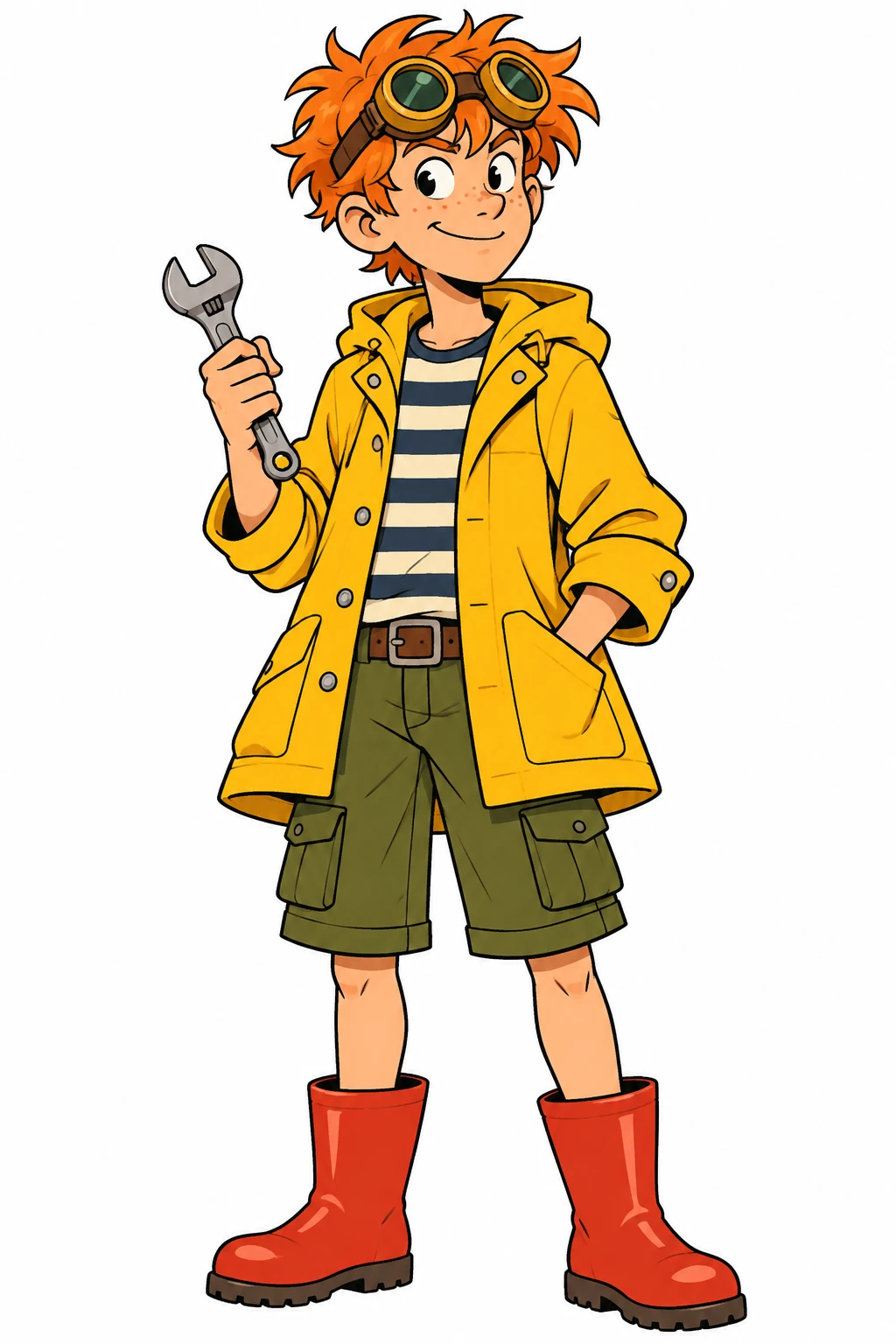
Gus the Inventor Prompt
Western cartoon style with bold clean outlines and flat bright colors. A teenage boy inventor with messy orange hair, round brass goggles pushed up on his forehead and freckles, wearing a yellow raincoat over a striped shirt, cargo shorts and red rubber boots, holding a small wrench. Full body, standing, plain white background.
Step 6: Make a reference sheet
Once you have a design you like, put it on one page: front and back views, a face close-up, the color palette and any detail that's easy to get wrong. A reference sheet keeps your OC consistent when you, a friend or an artist draws them again.
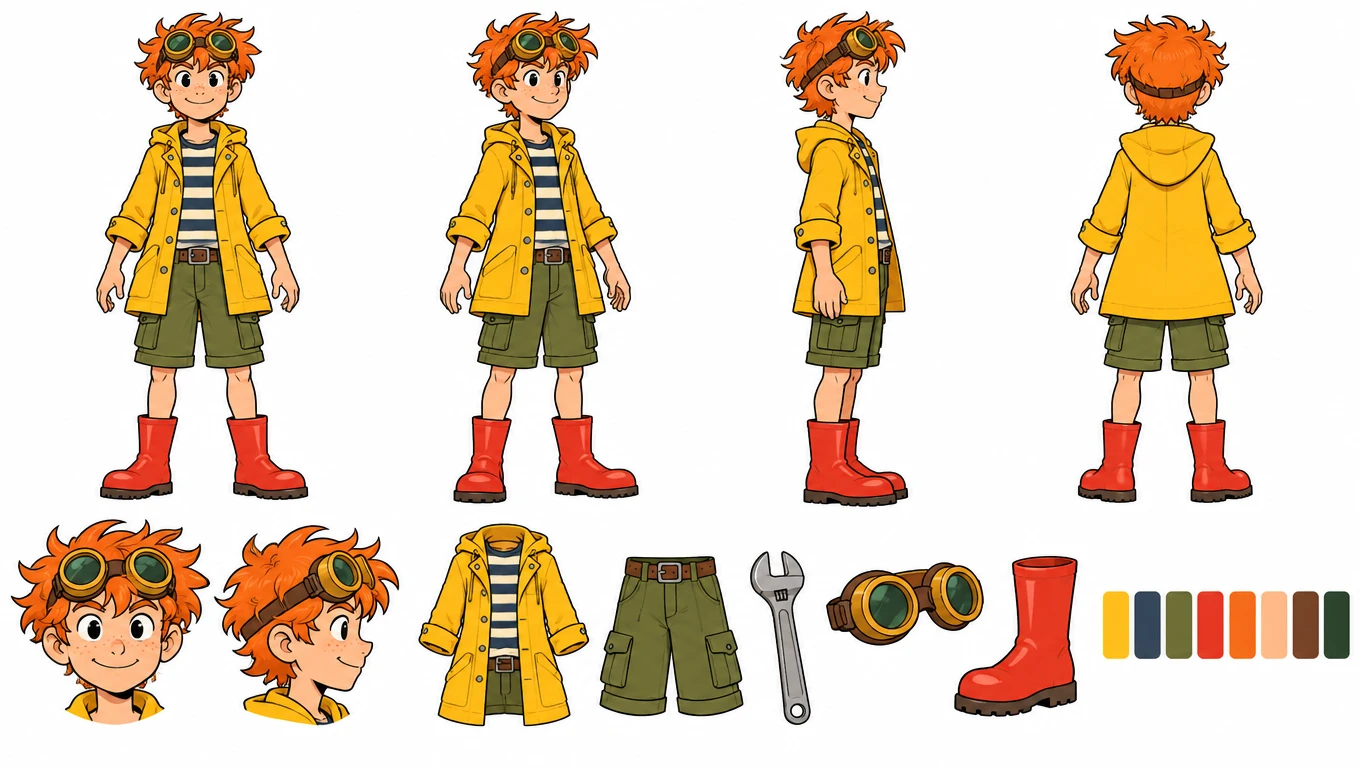
Gus's turnaround sheet Prompt
Turnaround sheet (with the character as reference): Character reference sheet on a plain white background, flat even lighting. Same character as the reference image. Keep the exact same design, colors, outfit, hairstyle, face and art style. Layout: a full-body turnaround in four clearly different angles — front view facing the viewer, three-quarter view with the whole body clearly turned 45 degrees to the side, side view in full profile, back view — at equal height, all in the same relaxed neutral standing pose with the arms slightly away from the body and empty hands. Below it: a row of head close-ups (front and profile), small detail callouts of the outfit, the accessories and any props the character carries, and a row of up to eight flat color swatches of the character's main colors. Clean spacing, nothing overlapping or cropped, no text labels.
Step 7: Use your OC
Give your character a life outside your notes: chat stickers, a PNGtuber avatar for streams, a token for your tabletop game, a phone wallpaper.
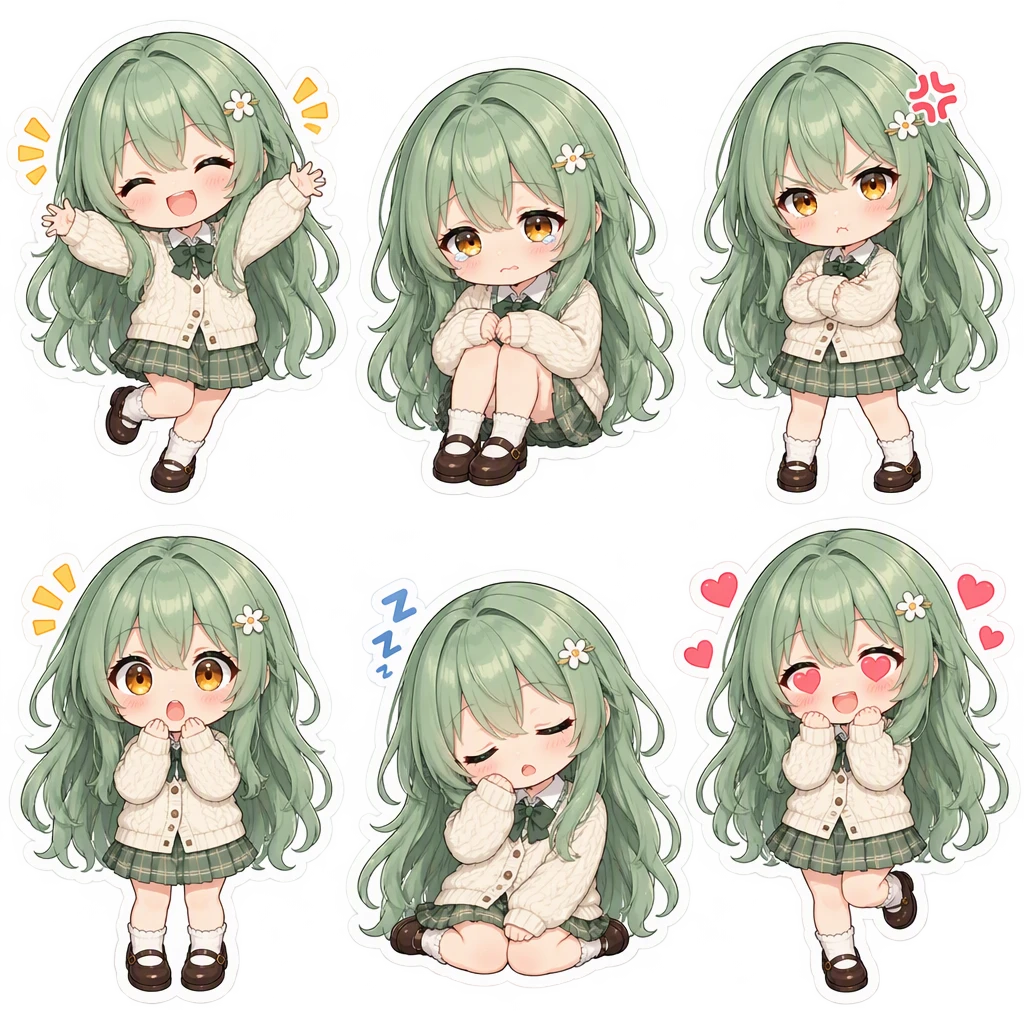
Sticker sheet Prompt
Sticker sheet (with the character as reference): Sticker sheet of the same character as the reference image: six chibi-style stickers arranged in a strict grid of 2 rows by 3 columns with equal square cells and generous spacing between them, one full expression per cell in this order: happy, sad, angry, surprised, sleepy, love-struck. Keep the exact same design, colors, outfit, hairstyle and art style. Each sticker has a thick white die-cut outline, plain transparent background, no cell borders, no text, no watermark.
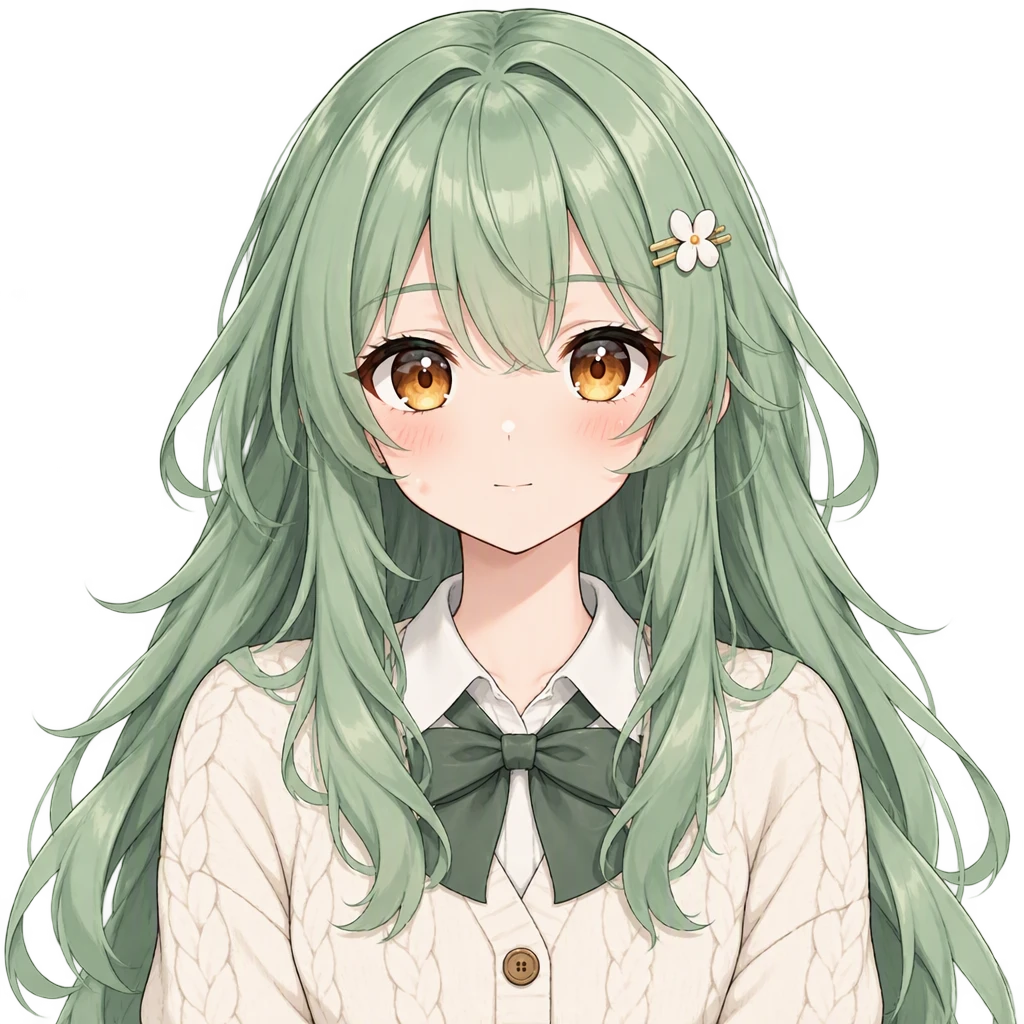
PNGtuber frame Prompt
Idle frame (with the character as reference): Front-facing portrait of the same character as the reference image, for a PNGtuber avatar. Keep the exact same design, colors, outfit, hairstyle, face and art style. Head and shoulders centered and facing the viewer, calm neutral expression, mouth closed, eyes open, plain transparent background, nothing else in frame.
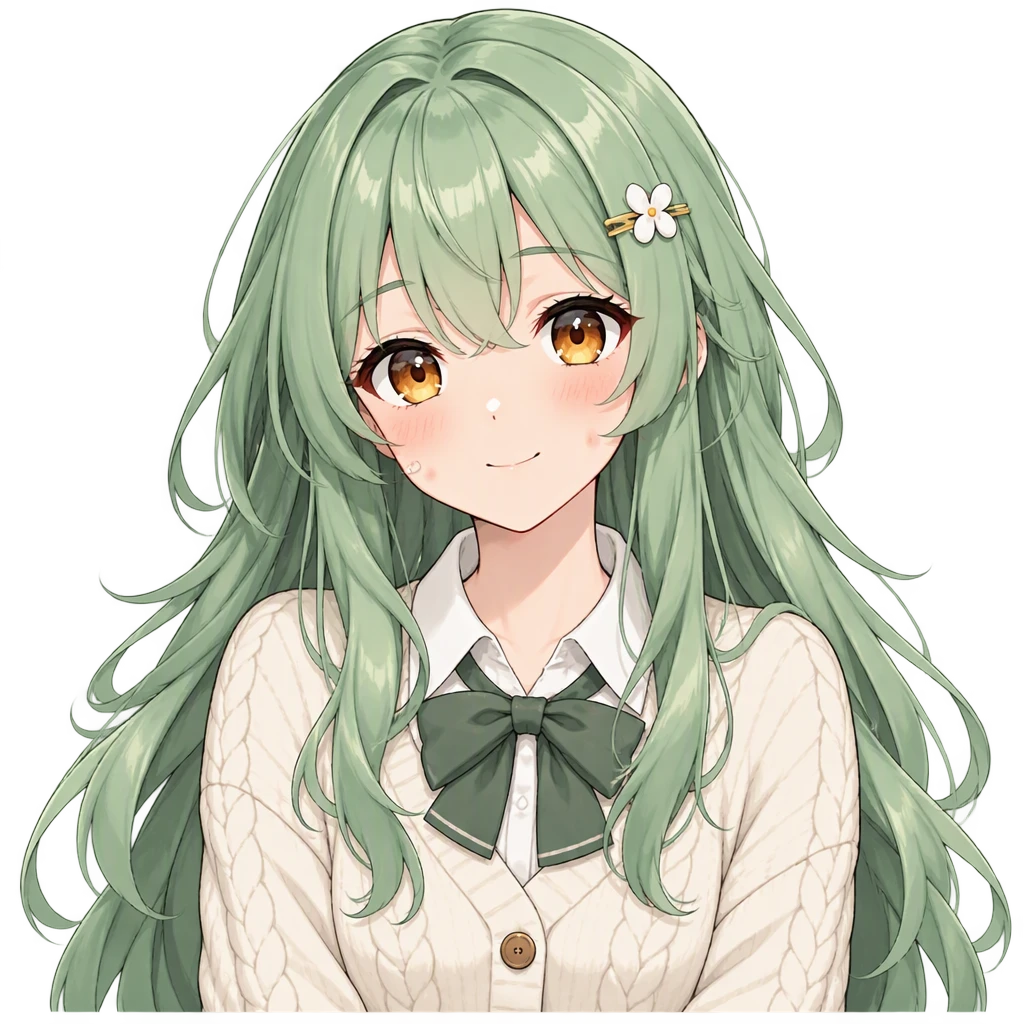
Token bust Prompt
Bust (with the character as reference): Front-facing bust portrait for a tabletop game token. Same character as the reference image. Keep the exact same design, colors, outfit, hairstyle, face and art style. Head and shoulders centered and facing the viewer, plain transparent background, nothing else in frame.
What makes a good OC?
A good OC has a want, a flaw and a look that matches both. They don't need to be the strongest or the most tragic; readers connect with characters who struggle with something ordinary. Avoid making them perfect at everything, and avoid copying a canon character with a new color scheme. The design should be simple enough to draw again and distinctive enough to recognize.
How to make an OC if you can't draw
Write the character first: concept, personality, backstory, name. Then turn the look into words an artist would understand: hair, eyes, build, outfit, colors, one signature detail and the art style you want. You can hand that description to an artist as a commission brief, build a version in a dress-up maker, or give it to an AI OC maker and get several versions to choose from. The writing is the part that makes the character yours.
How to make an OC for a fandom
Learn the world's rules first: how magic, powers or species work, what people wear, what the art style looks like. Then give your character a place in that world that canon doesn't cover: a different job, a different city, a different side of the conflict. Change more than the colors so they don't read as a recolor of a canon character.
Fandom-tuned makers with ready-to-edit prompts:
Questions to ask your OC
Answer a few of these to get to know your character:
- What do they want more than anything?
- What are they most afraid of?
- What do they do on a normal day?
- Who do they trust, and who do they avoid?
- What's a habit that annoys their friends?
- What would they never do, even if it helped them?
- What do they carry with them everywhere?
- How do they act when they're angry? When they're happy?
- What's a secret they've never told anyone?
- What would they change about their past?
How to Make an OC: FAQ
How can I create my own OC?
Start with a one-line concept (who they are, what they want, what stops them), add a personality with one real flaw, design a look that matches, and choose a name. Then draw them, build them in a dress-up maker or describe them to an AI OC maker.
How do I make an OC as a beginner?
Keep it small: one concept, three traits, one flaw, two or three colors and one signature detail. You can add backstory and lore later; a simple, clear character is easier to draw and to remember.
Can an OC be yourself?
Yes. Many people make a “self-insert” OC or a stylized version of themselves. Describe your look and personality the way you'd brief an artist, then decide what to exaggerate or change for the character.
What makes a good OC?
A clear want, a believable flaw and a design that matches both. Good OCs are recognizable, consistent and not perfect at everything.
Can I make an OC without drawing?
Yes. Write the character in words, then use a dress-up maker, commission an artist with your description, or describe it to an AI OC maker, which draws it in the art style you choose.
Is it okay to make an OC for a fandom?
Yes, fandom OCs are common. Respect the world's rules and make the character more than a recolor of a canon one. Selling fan art of a fandom you don't own is a different question and depends on the rights holder.
How do I name my OC?
Match the name to the world and the personality, say it out loud and check that it isn't already a well-known character in your fandom.